


DNA-MOOC: From structure to therapy -
(massive open online course) project with Jacobs University Bremen
In April 2014, our MOOC: DNA - from structure to therapy started for the first time on the iversity.org platform. It was a complete university entry level course offered free of charge. On this page we originally posted additional quizzes and other material not compatible with the iversity platform. The complete course is currently no longer available on iversity. Individual videos and supporting materials from the original course are now provided here on InCelligence, not as a complete MOOC. The earlier announcement of a further course period in the fall semester is no longer applicable.
The complete MOOC is currently no longer available on iversity. Here on InCelligence, individual videos and supporting materials remain available. The original additional quizzes are currently offline; registration, course progress tracking and a certificate for this MOOC are no longer offered.
DNA MOOC: Funny outtake videos
 |
Sometimes its good to practise things of which you once thought you could just do them as always. |
 |
It is always worth to start recording as early as possible because so many funny things happen. This applies especially to experimental settings. |
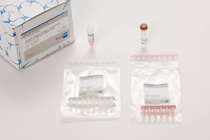 |
Labwork in general is fun. These are some of the funniest moments during the recording of the PCR experiment for the MOOC chapter on DNA methods. |
DNA MOOC: Teaser e-learning content element videos
To give you an idea how the original course was structured, we have posted some low-resolution versions of our videos here. The original course in total had about 80 3-8min units organized into 6 chapters:
| Chapter 1 | Introduction to the course |
| Chapter 2 | DNA carries the genetic information |
| Chapter 3 | The race to discovery of DNA structure |
| Chapter 4 | DNA Replication and PCR |
| Chapter 5 | Transcription, translation and therapy |
| Chapter 6 | Trying to cure a genetic disease |
E-learning videos available on InCelligence
The videos you see below are taken from various chapters. These represent examples. Not all 70 videos are online here.
| From Chapter 2: | |
 |
Intro session |
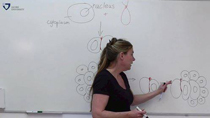 |
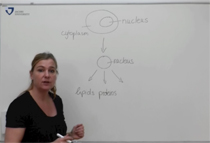
Hans Spemann's Experiment: In this short whiteboard video sequence, Nicole Kühl explains one of the fundamental experiments of Hans Spemann. He was the first one to prove that the cell nucleus is needed for cell division. |
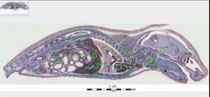 |
Cells, tissues and sizes: In this video we got through a microsection of a young mouse. Thereby, we try to get a feeling for sizes of organs, tissues, cells and organelles. We used the vicomic.de platform to record this video. |
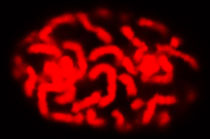 |
Mitosis: |
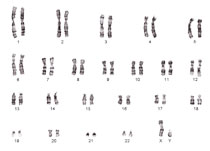 |
Karyograms: |
 |
Friedrich Miescher's experiments: |
 |
DNA isolation experiment: |
| From chapter 3: | |
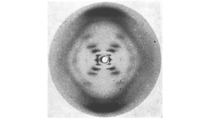 |
Performing the X-experiment |
 |
The race is on: a science thriller This is a low resolution draft version. |
| From chapter 4: | |
 |
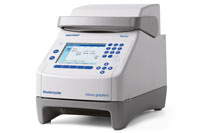
PCR experiment in the lab (mycoplasma detection) |
 |
PCR-based diagnosis: |
| From chapter 5: | |
 |
Translational questions:
|
|
Cellular metabolism: energy generation With this really nice experiment we want to explain how energy can be set free from nutrients. |
DNA MOOC: Links to resources and background material
Here is our collection of links to materials that proved helpful for participants in our first course in 2014:
| Thanks to | Chapter | Topic |
| SI | all | University level books: Principles of Biochemistry, 5/E (or earlier) Essential Cell Biology,3rd ed. |
| NK | all | http://www.hhmi.org/biointeractive/dna/animations.html DNA Animations: Replication, Transcription, Translation, Sequencing |
| Mona | all | Link collection of the NIH concerning genes and medicine |
| NK | 2 | Unit: Cells, tissues and sizes This is the link to the Vicomic platform we used to generate the video. |
| NK | 2 | http://www.ibiblio.org/virtualcell/index.htm A virtual tour through the cell. |
| NK | 2 | Units on Miescher and nuclein: A paper on Miescher's research and how he found nuclein (=DNA) can be read on Science direct. |
| Cintia | 2 | DNA basics on structure and function, some experiments outlined. |
| SI | 2 | Units on Flemming and mitosis: More information on Flemming and his original drawings can be found on one page of the Dietzel lab. |
| Hossein | 2 | Hershey/Chase experiment and homework: DNA strcuture, bases and Hershey/Chase experiment,images on phages attaching to a bacterium, the experiment etc. Original paper, Wikipedia explanation, Overview on lifescience foundation, Alfred Hershey vita, inspiring experiments summary,, summary on Princton page, results explanation |
| 2 | Hershey/Chase experiment | |
| NK | 3 | Unit: Chargaff's rules A collection of Chargaff's papers, photographs and much more can be found in the archives of the Am. Phil. Society. |
| SI | 3 | Units about Rosalind's X: Reprinted by permission from Macmillan Publishers Ltd: R. Franklin and R. G. Gosling, “Molecular configuration in sodium thymonucleate,” Nature 171, 740–741 (April 25, 1953) Only accessible with Nature subscription. |
| Juliane | 3 | Nature paper on Watson and Crick, Wilkins and Rosalind Franklin. |
| Manar | 3 | DNA basics |
| Laurence Fang | 3+5 | Why uracil instead of thymine ? |
| Manar | 3+5 | Uracil |
| NK | 4 | Units about PCR and PCR as a diagnostic tool:On these pages of eMedicine several articles can be found that explain the method of PCR aswell as why and how physicians use PCR in diagnosis. |
| Sawar | 4 | DNA fingerpriting and STR analysis pdf by J.M: Butler |
| Laurence Fang | 6 | More background information and animation on cystic fibrosis can be found on the pages of CFTR Science. |
| NK | 6 | Background on cystic fibrosis: in a pdf document designed by X-plain to explain the disease to patients who suffer from it. |
| Laurence Fang | all | The Emporer of all Maldies: a biography of cancer is book about the history of cancer research. This is the link to its Wiki page. |
| Peter | before or after the course | After the course you might want to look into other MOOCs, egg.: An Intro to biology: Peter, one of our participants says about this EdX course:"I can only say, MITs Intro to bio is the best MOOC I took so far, its rigorous, but duable and it uses 3d molecular models, gen cards and modelling soft, take it, its well worth it, its fun and uses more varied media then any other MOOC I took so far. Its an undergraduate intro. but MIT uses the same questions as on campus, but the exams are not closed book, after all its the net. It has lab vids, and some test questions involve interpreting gels, also it asks to look at 3d proteins and identify certain important atoms and bonds, then there is soft like foldit! which helps to understand protein folding, it has a chemical content, but there is also classical genetics, and of course, DNA. He definitely does not seem to be alone with this opinion as you can read in this blog comment. |
| Marinelle | before or after | The effects of diet on genetic integrity of children. |
Background information on the 2014 course and the certificate
Please note, this is histric information for certificate holders and readers. The course is not available on iversity any more and is not offered as a course elsewhere currently. This information is given for checking certificates of the 2014 course.
DNA MOOC: Course content
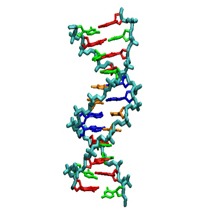
The original course had 6 chapters in total:
|
 |
DNA MOOC: Language and level
The original course language was English.
With some high school knowledge in biology and chemistry you can follow the individual videos provided here.
The original course had 6 chapters:
| Chapter 1 | Introduction to the course |
| Chapter 2 | DNA carries the genetic information |
| Chapter 3 | The race to discovery of DNA structure |
| Chapter 4 | DNA Replication and PCR |
| Chapter 5 | Transcription, translation and therapy |
| Chapter 6 | Trying to cure a genetic disease |
DNA MOOC: How to participate
In order to follow the original course in 2014, participants had to register on the iversity.org platform. In response, iversity sent an e-mail with a link that participants had to click to activate their account. Registration was only possible during the official course periods. After these periods, access to the course contents was intended for users already registered, but not for others. A further course period was planned for fall 2014. The complete course is currently no longer available on iversity, and these registration instructions no longer apply. The individual videos on this InCelligence page can be accessed without registering for the former MOOC.
DNA MOOC: Modes of participation
On iversity, participants could just watch the MOOC videos and take the quizzes to gather an understanding of the contents (passive participation), or take the complete course and do the quizzes to receive a certificate of participation. Homework was voluntary and did not count towards the progress needed for the certificate. Important notifications were sent to the e-mail address provided for registration. Other information could be posted in the forum. These participation modes and functions belonged to the original MOOC and are currently no longer available. This page now provides individual videos and supporting materials rather than the complete course.
DNA MOOC: Certificate = Statement of participation
In order to successfully finish the original course and receive the certificate, which was a statement of participation and not a statement of accomplishment, participants had to achieve a general progress of 80% on the videos and quizzes on iversity. Homework was voluntary and did not count towards the progress. At the latest after the official end of the course, the certificate was released by the instructors, and participants were generally notified by e-mail that it could be downloaded from the chapter page of the course. All participants received this notification; however, the download was only visible and possible for those who had achieved the 80% progress. These were the conditions of the original MOOC. A course certificate is currently no longer available; watching the individual videos on this page does not lead to a certificate.